Why Affordable Sailing Yachts Are Within Reach
Affordable sailing yachts aren’t just a dream—they’re a tangible reality for those who know where to look and what to prioritize. Whether you’re eyeing a classic full-keel cruiser under $50,000 or a modern production boat in the used market, smart choices can put you on the water without breaking the bank.
Quick Guide to Finding Affordable Sailing Yachts:
- Budget Range: Quality cruising sailboats start around $30,000-$50,000 for proven older models; newer used boats typically range from $80,000-$150,000
- Best Value Models: Westsail 32, Catalina 36, Island Packet 31, Pearson 35, Jeanneau Sun Odyssey 319
- Key Features: Solid fiberglass construction, manageable rig, protected cockpit, adequate tankage
- Hidden Costs: Plan for 10% of purchase price annually for maintenance, plus insurance, slip fees, and haul-outs
- Smart Strategy: Focus on condition over age—a well-maintained 30-year-old boat often outperforms a neglected 10-year-old vessel
The sailboat market offers surprising opportunities. While new production cruisers can easily exceed $200,000, the used market is rich with capable, well-built vessels that have already weathered their heaviest depreciation. Many classic designs from the 1970s and 1980s were built to higher standards than some modern production boats, featuring thicker hulls, stronger rigging, and simpler systems that are easier to maintain.
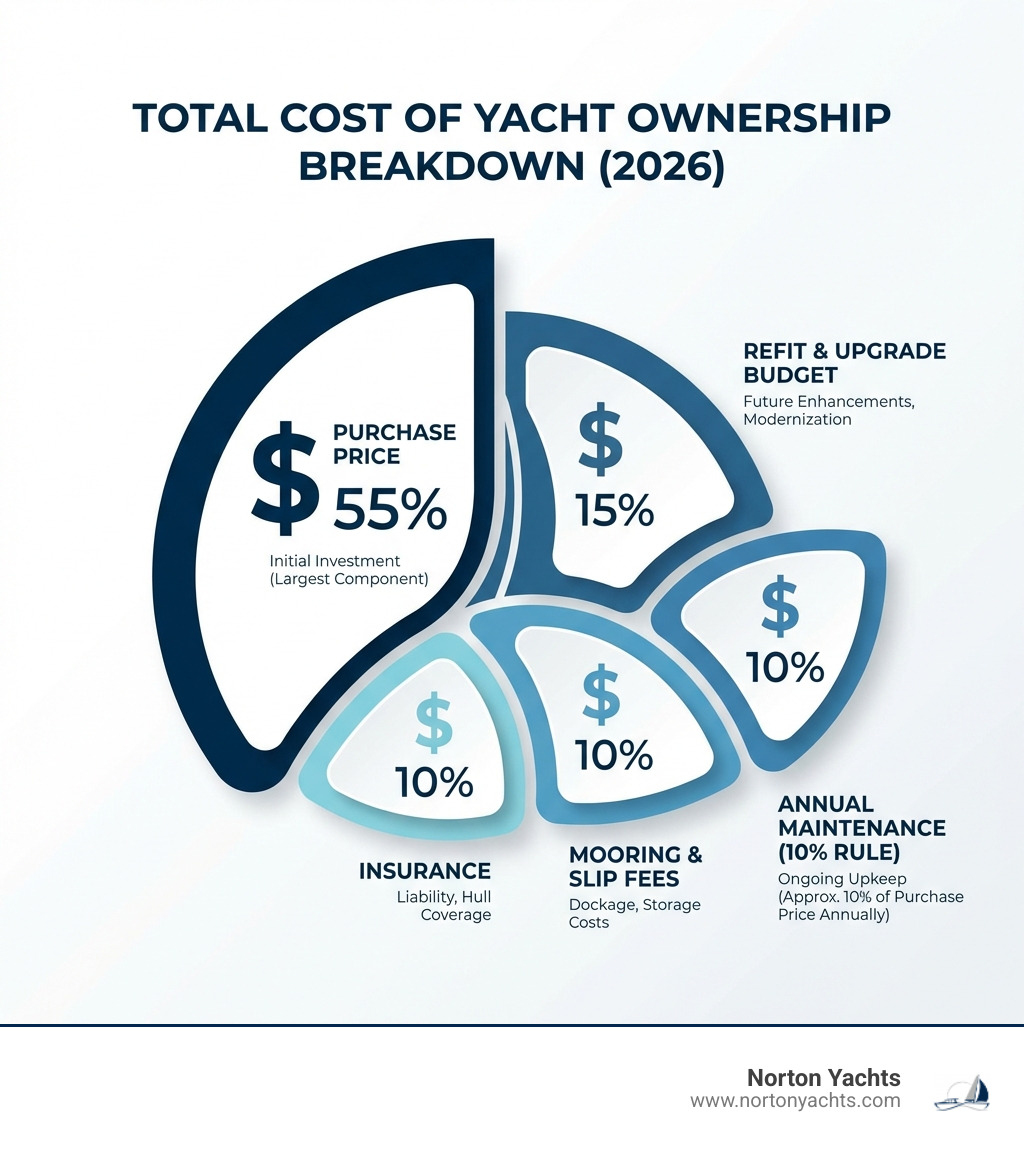
But affordability isn’t just about the sticker price. The real cost of yacht ownership includes insurance, mooring or slip fees, annual maintenance, and the occasional refit or upgrade. A $40,000 boat that needs $20,000 in immediate work isn’t truly affordable—it’s a project. Understanding the total cost of ownership is critical to making a sound decision.
The key is knowing what to look for. A seaworthy yacht doesn’t need to be new or expensive. It needs solid construction, proven design, manageable systems, and a documented maintenance history. Whether you’re drawn to the heavy-displacement classics that launched the cruising boom or the modern production models with twin rudders and wide beams, there’s a path to ownership that fits your budget and sailing ambitions.
I’m Kendall Webre, Senior Sales Executive at Norton Yachts, where I’ve spent years helping clients steer the yacht market to find vessels that match their performance, lifestyle, and budget goals, including a wide range of affordable sailing yachts. My role is to ensure you understand not just the purchase price, but the complete ownership picture—so you can make an informed, confident decision.
What to Look For: Key Traits of a Seaworthy and Affordable Yacht
Defining the essential characteristics that make a sailboat a smart investment for coastal or bluewater cruising, balancing cost with capability.
When we talk about affordable sailing yachts, we’re not just looking for the cheapest boat available. We’re seeking the sweet spot where initial cost, ongoing maintenance, and the boat’s capability for its intended use (be it coastal cruising on the Chesapeake Bay or dreaming of further horizons) all align. This means focusing on robust construction, practical design, and features that contribute to seaworthiness without breaking the bank.
Build Materials, Keel Type, and Rig Configuration
The fundamental characteristics of a sailboat’s construction play a huge role in its long-term affordability and suitability.
- Build Materials: Historically, sailboats were crafted from marine wood, and some exquisite examples still grace our waters. However, modern construction largely relies on fiberglass and composite materials. We often see two main types of fiberglass hulls:
- Solid Fiberglass: Many older, classic designs feature thick, solid fiberglass hulls. These are incredibly robust and durable, often built to withstand significant punishment. While heavier, they are less susceptible to moisture intrusion issues that can plague cored hulls.
- Cored Hulls: Modern boats, especially those designed for performance, often use cored construction (e.g., balsa or foam sandwiched between fiberglass layers). This makes the hull lighter and stiffer. While great for performance, older cored hulls require careful inspection for moisture intrusion, which can cause costly delamination repairs. Our team at Norton Yachts is well-versed in fiberglass composite structures and can advise on inspection and repair. Also, understand the risk of electrolysis, which can damage underwater metals on older vessels. Learning what is electrolysis is crucial for any boat owner.
- Keel Type: The keel is the underwater “wing” that provides stability and helps the boat resist leeway. Different types have distinct advantages:
- Full Keel: Found on many classic bluewater cruisers (like the Westsail 32), a full keel runs almost the entire length of the hull. It offers exceptional directional stability, making the boat track well in a seaway and providing protection for the rudder and propeller in case of grounding. The trade-off is often slower speed and less maneuverability in tight quarters.
- Fin Keel: More common on modern designs, a fin keel is shorter and deeper, offering less wetted surface area for better speed and maneuverability. However, it provides less protection for the rudder, which is often a separate spade rudder.
- Modified Full Keel/Long Fin Keel: A hybrid design, offering a balance between the stability of a full keel and the performance of a fin keel.
- Shoal Draft Options: For cruising grounds like the Chesapeake Bay, a shallower draft (often achieved with winged or bulb keels, or even centerboards) can open up many more anchorages and reduce concerns about depth.
- Rig Configuration: The mast and sail plan also impact affordability and usability:
- Sloop Rig: The most common and simplest rig, featuring one mast and two sails (main and jib/genoa). It’s efficient, easy to manage, and offers good performance.
- Cutter Rig: Features an additional forestay with a smaller headsail (staysail) set inside the larger jib. This provides more versatility in heavy weather, allowing for a smaller, easily managed sail plan. Island Packet yachts, for example, are known for their effective cutter rigs.
- Ketch/Yawl: These rigs have a second, smaller mast (mizzen) aft of the mainmast. They offer greater flexibility in balancing the sail plan and reducing individual sail size, which can be beneficial in strong winds or for single-handed sailing. However, they add complexity and maintenance.
Balancing Age: Classic Designs vs. Modern Production Models
The market for affordable sailing yachts is essentially split between older, classic designs and newer, often lightly used production models. Each has its own set of advantages and disadvantages.
- Classic Designs (e.g., 1970s-1980s):
- Pros:
- Robust Build: Many were overbuilt with thick fiberglass hulls, strong rigging, and often encapsulated keels, designed for serious offshore work. This “tank-like toughness” translates to proven seaworthiness.
- Lower Purchase Price: Having depreciated significantly, these boats offer incredible value, often found well under $50,000 for capable bluewater cruisers.
- Proven Track Records: Many have proven track records, with circumnavigations and countless offshore passages.
- Simpler Systems: Often easier for a DIY owner to maintain and repair, reducing labor costs.
- Cons:
- Higher Maintenance Potential: While simpler, systems are older and may require more frequent attention or replacement. Teak decks, common on many classics, are beautiful but can be a significant maintenance headache and expensive to replace if neglected.
- Older Aesthetics and Comforts: Interiors might be darker, layouts less open, and amenities less luxurious than modern boats. Headroom can also be a compromise on smaller older models.
- Slower Speed: Heavy displacement and full keels often mean slower average speeds, which some sailors might call “wet-snail 32” (referring to the Westsail 32).
- Availability of Parts: Some proprietary parts may be hard to find, though many components are standard marine equipment. Proper care is paramount for older vessels, especially in our climate. Our tips for winterizing your boat can help protect your investment.
- Pros:
- Modern Production Models (e.g., 2000s-Present, used):
- Pros:
- Modern Amenities and Comforts: Brighter, more open interiors, better ventilation, and contemporary galleys and heads.
- Lighter and Often Faster: Designed with more efficient hull shapes (wider beams, fin keels, spade rudders) for better performance in lighter winds and easier maneuverability.
- Less Initial Refit: Even lightly used modern boats will typically require less immediate work than a 30-40 year old classic.
- Easier Handling: Many feature simplified rigging, roller furling, and self-tacking jibs, making them ideal for short-handed sailing.
- Cons:
- Higher Initial Cost: Even used, these boats will generally command a higher price than their classic counterparts.
- Lighter Construction: While strong, some modern production boats may not have the same “overbuilt” feel as older bluewater designs, particularly in the hulls and rigging.
- More Complex Systems: Integrated electronics and complex mechanical systems can be harder for a DIY owner to troubleshoot and more expensive to repair.
- Pros:
Essential Features for Bluewater Cruising on a Budget
Regardless of age, a sailboat intended for offshore work, even on a budget, must possess certain non-negotiable characteristics to ensure safety and comfort.
- Strong Hull-to-Deck Joint: This is critical. Look for robustly joined decks, ideally glassed from the inside for a monolithic structure. Bolted joints can be prone to leaks and structural issues if not well-maintained.
- Protected Cockpit: A deep, well-protected cockpit with high coamings offers shelter from waves and wind, crucial for comfort and safety in rough seas. Cockpits that drain quickly are also essential.
- Adequate Tankage: For extended cruising, you need sufficient capacity for fresh water and fuel. Scrimping on tankage means more frequent stops or reliance on watermakers and jerry cans, adding complexity and cost.
- Simple, Robust Systems: While modern electronics are fantastic, offshore, simplicity often equates to reliability. Manual backups for critical systems (steering, bilge pumps) are a must. Well-maintained, easily accessible mechanical systems are key.
- Ample Storage: Bluewater cruising requires carrying a lot of gear, provisions, and spare parts. Look for boats with dedicated lockers, bilge space, and robust sea berths.
- Manageable Sail Plan for Short-Handed Sailing: Most cruisers sail as a couple or even single-handed. A sail plan that can be easily reefed and managed from the cockpit is vital. Cutter rigs are excellent for this, as are well-designed sloop rigs with roller furling.
Top Affordable Sailing Yachts: Proven Models to Consider
A curated list of reputable sailboats known for their blend of affordability, quality, and seaworthiness, representing different design philosophies. All models highlighted are available through Norton Yachts’ brokerage and new boat inventory.
At Norton Yachts, we pride ourselves on helping you find the right vessel, whether it’s a new Jeanneau or Saffier, or a well-maintained brokerage boat. Our expertise across brands and types means we can guide you to an excellent match for your budget and sailing dreams.
The Indestructible Classics (Often Under $50k)
These are the workhorses of the cruising world, often available for a fraction of their original cost, offering incredible value for their seaworthiness and robust construction. Many of these boats, built in the 70s and 80s, were designed with heavy displacement and full or long fin keels, earning them a “go-anywhere” reputation.
- Westsail 32: Often called “the cruiser that launched the cruising boom,” the Westsail 32 is legendary for its full keel, heavy displacement, and tank-like construction. While critics dubbed it the “wet-snail 32” for its leisurely pace, its ability to shrug off heavy weather is unparalleled. Anecdotes of Westsail 32s surviving extreme conditions abound, making it a true “ticket to paradise” for those dreaming of remote islands. We’ve seen them prove their mettle on Atlantic coast passages and beyond.
- Island Packet 31: Island Packets are renowned for their robust construction, full foil keels, and cutter rigs, making them ocean-capable and designed for long-distance cruising. The Island Packet 31, a smaller sibling to the 349 mentioned in our research, often falls into the affordable category on the used market. Their distinctive “salty” style and solid build quality make them a favorite among those seeking a dependable bluewater cruiser.
- Tayana 37: With approximately 650 units produced, the Tayana 37 is a classic Robert Perry design known for its beautiful lines, heavy displacement, and capable offshore performance. Often found with a cutter rig, they are a delightful practical liveaboard choice. While finding one in pristine condition for under $50k can be challenging, a well-cared-for example offers immense value for serious cruisers.
- Cape Dory 30: Carl Alberg’s designs are known for their traditional looks and solid construction. The Cape Dory 30, with its full keel and traditional lines, is a capable coastal cruiser that can often be found in the $12,000-$32,000 range. They are stout and provide good protection in a seaway.
- Endeavour 37: Known for its roominess and affordability, the Endeavour 37 offers a lot of boat for the money, typically ranging from $20,000-$49,000. While perhaps not designed as a pure bluewater boat without significant upgrades, it provides a comfortable platform for coastal and near-offshore cruising.
For those serious about offshore voyaging, we highly recommend books like The Voyager’s Handbook: The Essential Guide to Blue Water Cruising by Beth Leonard for comprehensive preparation.

The Capable All-Rounders
These models strike a fantastic balance between cruising comfort, respectable performance, and affordability, making them excellent choices for coastal cruising, weekend getaways, and even some offshore adventures.
- Catalina 36: A perennial favorite, the Catalina 36 is lauded for its spacious interior, ease of handling, and solid construction. It offers excellent value and is a popular choice for families and couples cruising the Chesapeake Bay and beyond. We frequently see well-maintained Catalina 36s on our brokerage listings.
- Pearson 35: Pearsons are known for their solid fiberglass construction and comfortable interiors. The Pearson 35, like many of its siblings, offers a good blend of space and sailing ability, making it a capable all-rounder for coastal cruising and extended trips.
- Beneteau Oceanis (various older models): While newer Oceanis models are at a higher price point, older Beneteau Oceanis models (e.g., from the 1990s or early 2000s) can represent excellent value on the used market. They offer comfortable interiors, good sailing performance, and a strong global presence for parts and support.
Modern Entry-Level Cruisers
For those looking for a more contemporary design, often with more modern amenities and lighter construction for better performance in lighter airs, the used market for newer production boats or specialized new models offers compelling affordable sailing yachts.
- Jeanneau Sun Odyssey 319: This compact yet capable cruiser is an excellent example of a modern entry-level sailboat. It features two enclosed cabins and a well-appointed galley, making it ideal for families or couples. The Sun Odyssey 319 balances affordability, modern design, and performance, offering easy cruising with a secure cockpit and standard wheel steering. Norton Yachts is proud to be a Jeanneau dealer, and you can explore all Jeanneau Sun Odyssey Models through us.
- Saffier Yachts: While perhaps not “entry-level” in the same vein as some production cruisers, Saffier Yachts offer exceptional quality, performance, and ease of handling in a modern package. As a new Saffier Yachts dealer, we can attest to their innovative designs and build quality, which translates to excellent long-term value and low maintenance for their category.
- Beneteau Oceanis 30.1: The Oceanis 30.1 offers luxury and performance in a compact package. Its beam of under 3 meters even allows for trailering by road in some regions, offering immense flexibility and potentially reducing mooring costs. It’s perfect for families or couples looking for a cruiser with modern amenities and style, and used models can be found at attractive price points.
- Bennington Pontoon Sail Options: For those whose definition of “sailing” includes enjoying the water with friends and family in a stable, comfortable platform, some Bennington pontoon boats can be outfitted for a unique sailing experience. While not traditional offshore sailboats, they offer an incredibly accessible and affordable way to get out on the water, especially on calm inland waters or the protected areas of the Chesapeake Bay. As a Bennington dealer, Norton Yachts can help you explore these versatile options.
The Buyer’s Guide: Securing Value and Avoiding Pitfalls
Actionable advice for navigating the used boat market, from finding the right vessel to ensuring it’s ready for the water.
Once you’ve identified potential affordable sailing yachts, the real work—and fun—begins. This stage is about due diligence, ensuring you’re getting good value and a seaworthy vessel, not a money pit.
Uncovering Hidden Costs Beyond the Purchase Price
The sticker price is just the beginning. Budgeting for these ongoing expenses is crucial for a sustainable sailing lifestyle.
- Insurance: Rates can vary significantly based on the boat’s age, value, type, and your experience. Older boats, especially those over 20-30 years old, can sometimes be more challenging or expensive to insure, particularly for offshore coverage.
- Slip and Mooring Fees: In popular areas like Deltaville, Norfolk, or Annapolis, these can be substantial. A slip on the Chesapeake Bay can cost thousands annually. Consider a mooring ball or dry storage if available and suitable for your vessel to save costs.
- Annual Maintenance: As a rule of thumb, budget 10% of the boat’s purchase price annually for maintenance, repairs, and upgrades. This covers things like bottom paint, zincs, engine service, and sail repairs. Our Essential Guide to Winch Maintenance is a great example of the routine care needed.
- Haul-Out Costs: For bottom painting, inspections, or major repairs, you’ll need to haul your boat out of the water. This involves crane fees, yard fees, and potentially pressure washing.
- Unexpected Repairs: Things break. Engines need parts, rigging needs replacing, and sometimes a through-hull fails. Having a contingency fund is vital.
How to Find and Vet Affordable Sailing Yachts
Finding your dream boat requires a systematic approach.
- Online Listing Sites: Platforms like YachtWorld and Boat Trader are excellent starting points. They offer extensive filtering options (condition, price, length, year, make) to narrow down the 11,000+ sailboats listed.
- The Role of a Buyer’s Broker: Working with a reputable buyer’s broker, like our team at Norton Yachts, is invaluable. We have access to broader listings, understand market values, and can help you steer the complexities of offers, negotiations, and closing. We represent your interests, ensuring you get the best deal on a seaworthy vessel.
- Importance of a Professional Marine Survey: Never, ever skip this step. A qualified marine surveyor will carefully inspect the hull (for moisture, delamination, and structural integrity), deck (for core rot), rigging, engine, and all systems. They are your eyes and ears, identifying potential costly issues that an untrained eye would miss.
- Sea Trial Checklist: Once the survey is promising, a sea trial is essential. Test all sails, the engine (forward and reverse), steering, electronics, and ensure the boat handles as expected. This is your chance to feel the boat under sail and power.
- Checking for Deck Moisture: This is a common issue on older cored decks. A surveyor will use a moisture meter, but you can also look for soft spots underfoot.
- Inspecting Chainplates: These are critical structural components that secure the rigging to the hull. Ensure they are robust, properly bedded, and free from corrosion or cracking.
Getting Your Affordable Sailing Yacht Bluewater Ready
Even a robust, well-surveyed affordable sailing yacht will likely need some attention to be truly bluewater ready. This might involve upgrades or essential maintenance.
- Standing and Running Rigging Inspection: All wires (standing rigging) and lines (running rigging) should be thoroughly inspected. If the standing rigging is over 10-15 years old, plan for replacement. It’s a critical safety item.
- Engine and Fuel System Overhaul: Your auxiliary engine is your lifesaver in calms or emergencies. Ensure it’s in top condition, with a clean fuel tank, new filters, and reliable cooling. Our expert service center at Norton Yachts can handle all aspects of engine maintenance and repair.
- Upgrading Navigation Systems: While paper charts are essential backups, modern navigation systems (GPS chartplotter, AIS, radar) greatly improve safety and ease of navigation. Consider electronic upgrades for your boat to bring an older vessel up to modern standards.
- Essential Safety Gear: Invest in a high-quality EPIRB (Emergency Position Indicating Radio Guide), a life raft (serviced annually), properly fitted life jackets for everyone onboard, and a robust first-aid kit. Know your “Rules of the Road” and practice safety drills.
Frequently Asked Questions about Affordable Sailboats
How much should I budget for annual maintenance on an affordable sailboat?
We generally advise budgeting around 10% of the boat’s purchase price annually for maintenance, repairs, and routine upgrades. So, a $50,000 sailboat might cost $5,000 per year. This figure can fluctuate based on several factors:
- Boat Age and Condition: Older boats, especially those not carefully maintained, may require more significant investment initially to bring them up to snuff.
- Your DIY Skills: If you’re handy, you can save substantially on labor costs.
- Location: Costs for services, haul-outs, and parts can vary by region. In the Chesapeake Bay area, we see competitive pricing, but always get multiple quotes.
- Prioritizing Safety: Always prioritize safety-related maintenance (rigging, engine, through-hulls) over cosmetic improvements.
Can I get financing for an older, affordable yacht?
Yes, but it can be more challenging for boats over 20 years old. Traditional banks often have age restrictions. However, specialized marine lenders are more accustomed to financing older vessels, especially if they are well-maintained and survey well.
- Good Survey is Key: Lenders will almost always require a professional marine survey. A clean survey report significantly improves your chances.
- Credit Score: As with any loan, a strong credit score is beneficial.
- Down Payment: Be prepared for a larger down payment requirement for older vessels.
At Norton Yachts, we can connect you with trusted partners to explore your financing options.
What is the best size for a first-time affordable cruising sailboat?
For many first-time buyers looking for affordable sailing yachts, the 30-36 foot range is often considered the “sweet spot.”
- Interior Volume: Boats in this range offer enough interior space for comfortable cruising for a couple or small family, often including standing headroom, a functional galley, and a private head. The Jeanneau Sun Odyssey 319, for instance, offers two enclosed cabins, making it very livable for its size.
- Handling Ease: They are generally large enough to be seaworthy and stable in various conditions but still small enough to be easily managed by a single-hander or a couple. This makes them ideal for building confidence, perhaps after taking an ASA 104 Bareboat Chartering course.
- Maintenance Costs: While costs increase with length, the jump from 30 to 36 feet is often less dramatic than going beyond 40 feet.
The “best” size depends on your intended use, crew size, and personal comfort level, but this range offers a fantastic balance of livability, manageability, and affordability.
Conclusion: Your Sailing Dream is Closer Than You Think
The dream of owning an affordable sailing yacht is not out of reach. It’s about making smart choices, understanding the full scope of ownership, and conducting thorough due diligence. Whether you’re drawn to the rock-solid reliability of a classic bluewater cruiser or the modern comforts of a contemporary entry-level model, excellent pathways to ownership exist.
The journey starts with comprehensive research and expert guidance. Working with a knowledgeable brokerage like Norton Yachts helps you steer the market, find a vessel that fits your budget and dreams, and ensures you’re well-prepared for the adventures ahead. We’re here to offer our multi-brand expertise, extensive brokerage inventory, and full range of marine services right here in Deltaville, Virginia, serving the entire Chesapeake Bay region.
Ready to find your perfect vessel? Explore our extensive inventory of quality sailing yachts today and start your adventure.