
What is ASA 101 – Basic Keelboat Sailing?
So, you’ve just bought your first sailboat or you’re looking to charter one and you can’t wait to explore the water. However, it’s not as simple as hopping in, starting it up, and setting sail. The water is just like the road; there are rules and protocols so that everyone can travel safely. You’ll have to learn basic sailing terminology, and the proper points of sail to avoid potential disasters such as collisions, tumultuous winds, and sea conditions. Don’t worry though–Norton Yachts Sailing School offers the ASA 101 – Basic Keelboat Sailing course for first-time sailors to learn the basics. Upon completion, you’ll have confidence on the water as if you’ve steered a sailboat for years.
Learn to Sail in One Weekend with ASA 101 for $595
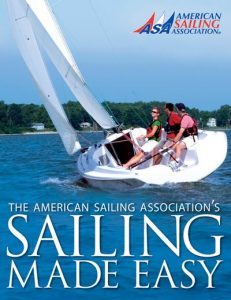
The ASA 101 – Basic Keelboat Sailing course teaches you everything there is to know about keelboat sailing, such as basic sailing terminology and navigation rules to avoid collisions and hazards. The ASA 101 course lasts for 15 hours and is taught over the course of one weekend or two consecutive weekdays. Once you have booked ASA 101, the ASA Textbook, “Sailing Made Easy,” will be mailed to your home address which is included in the cost of the course. You’ll learn sailing theory from the textbook and the instructor on the first day but in no time, you’ll be out on the water with a certified ASA instructor who will help you practice hands-on sailing skills. The American Sailing Association is among the most highly recommended leaders of sailing standards in the world, has accredited over 400 sailing schools (including Norton Yachts’ very own Norton Sailing School), and certified over 500,000 sailors through their classes. Upon completion of ASA 101, you’ll be a sailor with confidence who’ll be able to skipper a sloop-rigged keelboat in light to moderate winds and sea conditions. Additionally, your instructor will sign your very own copy of the official ASA Logbook so you can prove your certification to others.
The ASA 101 – Basic Keelboat Sailing curriculum is split into 2 parts: theory and skills. You’ll start the course by learning sailing theory from three textbooks; Sailing Made Easy, USCG Navigation Rules & Regulations Handbook, and A Boater’s Guide to the Federal Requirements for Recreational Boats. Once you’ve covered sailing knowledge, an ASA instructor will help you apply that knowledge to practice your sailing skills on the water.
Knowledge
Before your certified ASA instructor can teach you how to control a keelboat safely, you’ll need to know the basics of sailboats, terminology, parts and functions, docking, and buoyage seamanship and safety including knots and sea conditions.
Basic Sailing Terminology
Describe and identify the following sailboat parts and their functions:
- Hull • Deck • Transom • Keel • Mast • Boom • Gooseneck • Bow • Stern • Helm / Tiller /Wheel • Rudder • Cockpit • Cabin • Standing Rigging • Shroud • Spreader • Chainplate • Headstay / Forestay • Backstay • Stanchion • Lifeline • Pulpit • Winch • Cleat • Block • Fairlead • Fender • Docklines
Identify and describe the functions of the following sails, sail parts, and sail controls:
- Mainsail • Jib / Genoa • Head • Tack • Clew • Foot • Luff • Leech • Downhaul / Cunningham • Batten • Batten Pocket • Bolt Rope • Hank • Running Rigging • Halyard • Mainsheet • Jibsheets • Boom Topping Lift • Boom Vang • Telltale • Outhaul • Traveler • Shackle • Roller Furler
Define the following terms:
- Port • Starboard • Forward • Aft • Beam • Ahead • Astern • Abeam • Windward • Leeward • Draft • Freeboard • Heel • Weather helm • Skipper • Helmsman • Crew
Maneuvers and Points of Sail
Using diagrams, explain and identify the following maneuvers, points of sail, and other terms:
- Head-to-Wind • No-Sail Zone • Closed Hauled • Close Reach • Beam Reach • Broad Reach • Run • Sailing-by-the-Lee • In Irons • Luffing • Port Tack • Starboard Tack • Tacking • Jibing • Stand-on • Give-way
Utilize and explain correctly the following helm commands and crew responses:
- “Heading Up”
- “Bearing Away”
- “Ready About” —– “Ready” —– “Helms a-Lee” (or “Coming About” or “Tacking”)
- “Prepare to Jibe” —– “Ready” —– “Jibe-Ho” (or “Jibing”)
Navigation Rules:
Describe the applicable rules for a recreational 25-foot sailboat, as found in the USCG Navigation Rules and Regulations Handbook:
- Look-out, Rule 5.
- Sailing vessels with the wind on different sides (starboard / port), Rule 12(a)(i)
- Sailing vessels with the wind on same side (leeward / windward), Rule 12(a)(ii)
- Sailing vessel on port tack cannot determine windward sailing vessel’s tack, Rule 12(a)(iii)
- Overtaking (Rule 13)
- Power-driven vessels approaching each other head-on (Rule 14)
- Power-driven vessel with another power-driven vessel on starboard side (Rule 15)
- Describe appropriate actions to be taken when sailing in the vicinity of commercial traffic, including responding to a danger signal.
Aids to Navigation:
Identify and state the purpose of lateral aids to navigation by color, shape, and numbering, including preferred channel markers. Additionally identify safe water, information, and regulatory markers.
Safety Gear and Procedures:
- List the federally required equipment for a recreational sailboat of 25-feet in length.
- Identify the location and color of navigation lights used by a recreational vessel of 25-feet in length.
- Describe the purpose of a Float Plan, give examples of information contained therein and to whom it should be submitted.
- Describe when and to whom boating accidents must be reported.
- State the Federal Blood Alcohol Content (BAC) limit for vessel operation.
Skills
Once you’ve mastered the theory portion, you’ll be ready to move forward and learn to sail with your ASA 101 instructor, who will show you how to apply the knowledge you’ve learned and actually sail a boat.
Safety Equipment
Demonstrate the proper use of a lifejacket or personal flotation device.
Sailing
An ASA-certified sailor has successfully demonstrated their ability to rig/hoist/set sails safely and correctly to obtain proper sail trim using lines and controls (outhaul, mainsheet, winches, etc.). Without coaching or assistance, verbalize appropriate commands and demonstrate competence, safety, and good seamanship in the role of Skipper/Helmsman when performing several docking and sailing maneuvers (sail on a close reach, sail on a run, get out of “irons”, etc.). Honor all aids to navigation and ensure sails are trimmed correctly with the vessel in control at all times.
Crew Overboard
Describe and demonstrate the correct actions to be taken while under sail from the time a person falls overboard until safely recovered.
Return and Secure
Return to dock or mooring and secure the vessel using mooring/dock lines, fenders, etc.
Knots
Describe the purpose of and, without assistance, construct in a timely manner each of the following knots and hitches:
- Figure-8 Knot
- Square (Reef) Knot
- Clove Hitch
- Round Turn & 2 Half Hitches
- Cleat Hitch
- Bowline
More ASA Courses with Norton Yachts
If you love sailing, want to build your confidence as a sailor, and learn how to sail with a certified ASA instructor with all the resources in the world, then purchase an ASA course from Norton Yachts. We have a wide range of ASA sailing classes for new sailors and veterans alike, such as ASA 103 – Coastal Cruising and ASA 104 – Bareboat Chartering. For those who really want to dive in, book ASA 101 and ASA 103 at the same time and receive our combo package discount. Or sign up for our B2B (Basic to Bareboat; ASA 101, 103 and 104) and get certified in three classes being fully immersed on our boat for 6 consecutive days.